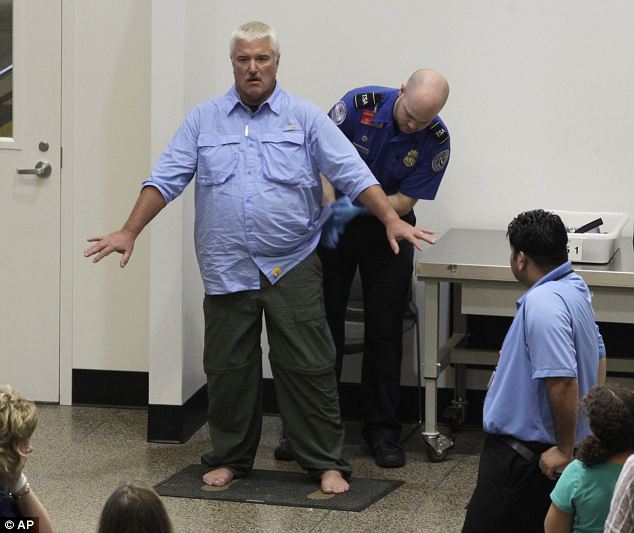
TSA Plans Vaguely Stupid Security Measures in Light of Vaguely Menacing Terrorist Threat

One artist’s rendering of the possible threat.

ARLINGTON, VA- In light of the vague, unprecedented travel alert issued by U.S. authorities on Friday, an anonymous source at the Transportation Security Administration has indicated that a similarly vague, stupid and unprecedented security measure will soon be rolled out at airports across the nation.

“When we got word that the Security Alert Level had been elevated due to intelligence gathered by the NSA, oh man, we all got really excited up here in central command,” said a source close to the matter, speaking on the condition of anonymity. “It felt like it could be the beginning of a new Golden Era, like the good old days, back when the Terror Alert Level was stuck on ‘Orange’ all the time for some reason. Here at headquarters, we’ve been up on an all-nighter, trying to get a really vague random security measure rolled out to airports, to match the NSA’s contribution on this vague security alert. There’s definitely a competitive feeling here. Just once we’d like to out-do that damned NSA.”

TSA higher-ups long for the days of the color-coded panic system.

The anonymous source declined to go into any specifics of the security measures that the TSA is considering, but offered a range of possibilities, from “Swabbing the socks of every male shorter than 5’5 or maybe just all males between the hours of 6:25 and 7:33 P.M. Eastern Standard Time” to “Mandatory X-Ray inspections of dog collars and brightly colored baby pacifiers” to “Asking passengers if they can do The Robot, and if so, would they like to do it in a private area” to “Just sort of looking really closely at the spots on the floor where passengers were just standing.”

“The Robot,” an illusory street dance that the TSA may be asking passengers at airports to perform in light of the vague threat.

“Whatever vague thing we end up doing, it is going to be goddamned stupid, it is going to be random, and God willing, it is going to finally put those NSA people in their place, ” the anonymous TSA source said.

An agency demonstration of the positions that female passengers may be asked to assume at airports.

“I mean, what are the chances? U.S. intelligence stumbles upon this menacing beauty right when its surveillance programs are under fire. Lucky bastards,” the source added.

—-

UPDATE 8/3/2013: The anonymous source has leaked the below diagrams intended for future release to the public as part of the TSA’s forthcoming step-by-step “How Should I Get Down if a TSA Officer Asks Me to do The Robot at the Airport?” awareness campaign:

—-

Other recent articles:

Taking Sense Away: On Newsstands Now 

The Mundane Truth of a TSA Screener’s Average Workday, Now on Instagram

If the TSA Can Prove That an Individual is Intentionally Subjugating the Security System, They’re Out the Door.

Posted in Uncategorized | Leave a comment

Coming Soon…

In the Insider’s TSA Dictionary, I defined Permament Emergency, former TSA head Kip Hawley’s tell-all memoir about his first-hand experiences with the formation of the TSA, as a “terrible book.” But I take that back. I am reading Permanent Emergency for the third time right now, and have realized that it’s not all that bad. Or, at least, the bad parts are not the fault of Hawley or his ghostwriter: they did their best, they really did. Taking a subject like the Transportation Security Administration and attempting to make a page-turner of a thrill ride out of it was an impossible task, and so it shouldn’t have surprised me that some of the book comes off as hokey. The first couple times I read it, I neglected to consider this fact, and was angry that I had to deal with 272 pages of Transportation Security Administration matters superimposed over a political-thriller template. But now, reading it this third time, a light bulb went off in my head.

At times, Permanent Emergency reaches levels of corniness that transcend any mere book detailing the formation of a lumbering bureaucracy that pats down people’s crotches and forces them to surrender their bottles of water. Reading it the third time, a tingly sensation began to creep up my spine. A smile escaped me as I turned one page– then a giggle– then a hearty guffaw– and in my mind a symphony swelled to a crashing crescendo as the full glory of the possibility spread over me like a billowing revelation…

Permanent Emergency possesses that magical formula, often sought after, rarely attained: Permanent Emergency is at times so bad…that it’s really fucking good.

Here’s one of the reviews on Amazon (more than half of them were written by people who apparently created an Amazon reviewer account just to review Permanent Emergency. We won’t even get into the controversial world of fake Amazon “sock puppet book reviews” here, but suffice to say, there may be just a little of that going on with Permanent Emergency).

“Kip Hawley does an amazing job of pulling back the curtain on aviation security. The book takes a never before seen look at a relevant, timely, and important subject – the safety of American air travel – in an unparalleled way. You’ll read about the terrorists who are constantly plotting to bring down airliners and the operatives, at home and abroad, who are dead set on stopping them. Permanent Emergency is a must read for anyone who wants to learn more about what really goes into keeping the traveling public safe, or those who think they know all there is to know. Hawley and Means do an excellent job of weaving together a compelling narrative that will blow your doors off. Expect a movie out of this one – it’s that informative, entertaining, and compelling.”

And now, an excerpt from the book…

—-

This is the story of the people who took up the challenge: the task of reimagining our aviation and transportation security. On the day of the attacks, some of these people were already deeply involved in America’s security and government network. Others were retired, working for private industry, even attending college or playing in bands. But over the next eight years, their individual contributions would be irreplaceable. In a breathtakingly short period of time, they created from scratch an agency that was simultaneously ambitious, flawed, inspired, ridiculed, innovative, and entirely unique within the federal government…

The Transportation Security Administration.”

—-

Ladies and genn’men, sometime within the next couple weeks, I am going to be presenting you with the proposed outline of a screenplay for…

p

Posted in Uncategorized | 1 Comment

“If the TSA Can Prove that an Individual is Intentionally Subjugating the Security System, They’re Out the Door.”

TSA’s deputy administrator threatened a revolution on Wednesday.

The other day, the GAO issued another one of its frequent reports criticizing the TSA, citing a rise in the number of misconduct cases and a failure on the part of many airports to properly use the TSA’s database to track those misconduct cases. The report prompted a spokesperson from the TSA’s union, AFGE, to fire back, crying foul.

Below is the breakdown of the GAO’s findings regarding the frequency and types of misconduct among TSA employees from 2010-2012.

tsa misconduct review chart 2

And below is a breakdown on the types of disciplinary measures meted out to the TSA workforce in those same years.

tsa misconduct review chart

 The TSA’s worker’s union shot back with this response:

“The GAO study of allegations of misconduct on the part of TSA employees has been wildly misrepresented. In an agency with a workforce the size of a small city, spread out over more than 400 airports, misconduct numbers this small indicate success, not failure. No one condones any misconduct and TSA is diligent in investigating allegations that range from being a few minutes late to work to violating security protocol.”

The union spokesperson then went on to claim that the TSA is the only thing stopping the U.S. from falling back into a “failed security system like the one pre-9/11,” and that privatizing airport security on a nationwide basis would be some sort of grave error.

This entire thing is a circus of silliness, to tell you the truth, as nearly everything involving the TSA has been from day one.

1) The rising number of TSA misconduct cases is not good, there is no denying that. But the thing we should be looking at if we truly want to identify the central flaws of the TSA so as to improve it (or even make a thorough case for privatization), is the cultural and systemic problems of the TSA’s, not just the symptoms of the underlying issue. As just one example of what the numbers on that first table may actually translate to, in a deeper sense: think about the third largest category on the table, “Failure to Follow Instructions.” What percentage of those instructions were issued by members of upper management with questionable qualifications, or who are universally despised by their subordinates? Why is TSA management so vehemently despised by so many subordinates? What’s the nature of the promotion system that brought those managers into place? How many of those screeners who failed to follow instructions were actually just exercising common sense within a culture of absurdity?

2) The GAO itself is enabling the TSA to continue its existence as a deeply flawed organization through these desultory, superficial reports, which the House Committee then pounces upon right on cue, giving its clockwork show of consternation for the cameras.

3) The union president had a valid point when he called attention to the size of the TSA workforce in comparison to the GAO’s numbers on employee misconduct, but then went on to undermine it by claiming that the TSA is the “Only thing standing in the way of a return to the failed, for-profit security model.” The TSA was just the government’s way of saying “Sorry, don’t be scared, you’re safe on airplanes now, we’ve got everything under control” after 9/11, even though the critical aviation security vulnerabilities that could sensibly be addressed were mostly resolved before the inaugural class of TSA screeners was even deployed (the hardening of the cockpit doors being the most costly and time-consuming measure that actually made sense). Nationwide privatization of airport security would not make the nation’s airways any less safe.

To the AFGE union president: I understand that your bombastic statement was designed to fend off the steady drumbeat for airport security privatization from certain corners of D.C., in the interest of preserving your organization’s position as the TSA workers’ official union, but I don’t think that it’s in your best interest to call any sort of attention to the costs and or benefits of federal vs. private security.

Finally, John Halinki, TSA deputy administrator, put the cherry on top of the entire affair by informing the House Committee on Homeland Security:

“If we can prove that an individual is intentionally subjugating the security system and we can prove it immediately, they’re out the door.”

Good to know that the TSA will only stand for individuals who are unintentionally reigning over the entire federal aviation security system.

—-

Posted in Uncategorized | 2 Comments

The Mundane Truth of a TSA Screener’s Average Work Day, Now On Instagram

This is a bottle of water I confiscated. Folks bring the darndest things to the airport.

Another bottle of water I confiscated. The passenger was planning on using it for drinking.

This one is a bottle of water I confiscated. The passenger looked thirsty.

This is peanut butter I confiscated. Passenger also had bread.

Jelly.

Passenger was trying to get fancy with this one. Still got confiscated though. It’s a bottle filled with water.

This passenger had a suspiciously dry mouth.

I discovered this in a passenger’s backpack. It is a bottle of water.

A whole family tried to smuggle these through.

This one’s a grandmother. I didn’t confiscate her. Just confiscated her time, along with everyone else’s, by patting her down.

And finally, this was discovered at the end of my shift. It’s inert water. As you can see, the passenger spent a lot of money trying to smuggle this one through. The bottle even has its life story etched all over it. But I wasn’t listening. Because it’s a bottle of water. And so I confiscated the shit out of it.

—-

On Facebook,  Twitter.

Posted in Uncategorized | 1 Comment

Taking Sense Away: On Newsstands Now

When the folks at Reader’s Digest contacted me about helping them put together a TSA-themed article for their magazine, I paused long and hard. Could I possibly do such a thing? After all, what if the entries I wrote for them ended up making the TSA look a little silly to people browsing the aisles of Walgreens and CVS stores across the nation?

Then I remembered that fuck yes I could do such a thing.

And so another former screener and I, whom you will be hearing more from soon, collaborated to bring this piece to newsstands across the nation. “13 Things TSA Security Won’t Tell You.” I think you’ll definitely recognize several of those entries (I am proud to say that the Insider’s TSA Dictionary term “Baby Shower Opt-Out” is in wide circulation, as we speak).    

So if you happen to be in a place that sells magazines any time soon, flip through Reader’s Digest and check it out. (The official credit to this blog is only in the print version of the article, I found out today at the drug store. Hey, I’ll take it.)

Update: USA Today also covered the piece, here.

—-

Posted in Uncategorized | 1 Comment

Letters from Passengers: Extended Release

TSAs Anatomy

First up is a short but sweet letter from Rob.

Is my TSA cartoon/article worth a plug? 

-Rob

Your TSA cartoon/article is absolutely worth a plug. It turns out Rob’s an author and contributor to Boing Boing, the website whose founder had his daughter “slut shamed” several weeks ago, as I’m sure we all remember (he posted that cartoon before the shaming incident even occurred, so it’s not retaliatory or anything, though I doubt anyone would much mind if it were). In the cartoon linked above, Rob brings up one of the most interesting statistical tidbits in the history of TSA-related cost/benefit analysis research: the very real possibility that post-9/11 airport security has actually killed more people than it has theoretically saved, due to the increase in road fatalities as a result of more people forgoing air travel in favor of driving to their destinations.

Up next is Clint, with an idea for a brand new sitcom:

I can’t help but think that there is a niche for a TSA sitcom. While there is plenty of outrage and drama to go around, I imagine it would make exhausting viewing. Mockery and smartassery have the potential to keep the audience coming back. Beyond the absurdity of the actual rules, there is a meta-absurdity in that not only do the passengers not want to follow the TSA rules, the TSA agents themselves don’t particularly want to enforce them (Barny Fife’s aside).

I can only hope the blog someday leads to you getting cushy gig as consulting writer/editor for a show poking fun at the TSA.

You have no idea how much I would love to write a sitcom centered around the TSA. Almost every TSA screener with an ounce of imagination has at some point uttered the words, “This job is so ridiculous, there should be a movie, or TV show, or book about it.” My only concern about being a writer on a TSA sitcom would be that the show’s producers would require a current TSA employee to be on-set as a consultant, constantly going over the script to ensure both accuracy and compliance with Sensitive Security Information regulations. This would likely lead to a TSA officer constantly asking me to remove the script from my briefcase for inspection, leading to a twist worthy of the Greeks: in professionally making fun of the TSA, I would be doomed to suffer eternal torment by the TSA.

Here’s Lucas B, chiming in on the “Valet-parked cars searched under TSA regulations” story that caused a stir the other week, prompting our buddy Blogger Bob to issue an official TSA repsonse that could have come straight out of the TSA Policy Generator. Please email and let me know if you guys really are using the TSA Policy Generator, Bob.

Dear Taking Sense Away,

Chances are this has already been submitted to you, but here it is anyway:  “Valet- Parked Cars Searched Under TSA Regulations.”

Some fun points about the implications of these regulations:

1) The TSA is apparently now concerned about what happens on the non-secured side of the airport. It’s no longer a free-for-all of water bottles of any size, concealed pocket knives, and rolling pins. Nope, now we have to fear bombs going off outside the airport. No word about their policy regarding bombs inside.

2) I’ll give them credit for coming up with a security measure that addresses something that hasn’t been attempted yet. Only partial credit, see above for reasons.

3) The searches are conducted by the valets. Who don’t have to be certified every six months. Who aren’t being showered with free TSA uniforms. Yup, valets are now partially responsible for the security of airports.

The TSA’s official “short version” response to the story of a woman in Rochester, NY discovering a note in her car informing her that her “vehicle had been inspected under TSA regulations” is as follows:

The short version: While we deploy numerous layers of security, TSA officers are not inspecting cars or mandating that they be searched. In this case, it turns out the car was searched by an employee of a car parking service. 

Each airport authority, along with its state and local law enforcement partners, is responsible for securing airport property, including the outer perimeter. At this particular airport, car searches are part of their ‘airport security plan.’ “

It seems that this search came about from a local policy at Rochester, whereby city-mandated random searches of valet-parked cars are performed with TSA approval. I like Lucas B’s observation that, at that airport, the valets are partially responsible for performing in the security theater show, without having to suffer the TSA’s training department or useless recertification tests. In fact, parking valets are just about as qualified to provide security at airports as almost any TSA employee, as the common profile of a parking valet will show you. I did some research into the parking valet profession, and was delighted to find:

CONFESSIONS OF A VALET PARKER

From the story, which originally ran on Yahoo News:

“Most parking valets fall into three general categories. The first is student types seeking flexible hours and a job that doesn’t require much training. The second group is often working nights after another job, and are often the most dedicated employees. The third and smallest group are folks often unable to hold down any other work, and they’re the most prone to hitting poles in parking lots, losing keys and disrespecting customers.

I have known valets who lower tire pressures, change climate and radio settings, or intentionally ding the door or scrape paint in a place where it’s not easily noticed. There’s nothing better than getting your revenge and getting them to tip you, too. Though I personally never riffled through anyone’s belongings, I hear plenty of, ‘You should have seen what I found in this person’s car’ while we’re standing around waiting for cars to pull in.”

Sound familiar? Again, you can read the whole story here, and then the people flying through Greater Rochester International Airport can decide how much safer they feel with Rochester’s local policy of giving federal approval to bad behavior on the part of parking valets.

Up next we have Chaim:

Hi there, NJR,

You mention some people who were TSA agents in the beginning who were misguided patriots, and I’m sure that at least a few of the TSA agents out there are or have been people desperate for any job in this rough economy. Still, it’s the disproportionately high number of bullies, perverts and thieves within the agency which give it the well-deserved negative image which it has.

So, what I wanted to ask was this: If you had to guess, how many people who work for the TSA would you say are the scummy people who see this sort of thing as their dream job in their twisted minds, and how many are the well-meaning yet misguided dupes or people just desperate for a paycheck? (I’m not asking for some exact, scientifically-proven figure, just a rough estimate).

-Chaim

All I can give here are of course very rough estimates, informed by 6 years working at a Category X airport (a really big airport) and by occasionally talking to TSA employees based out of other airports, usually NDF screeners (traveling TSA screeners). In my mind, I usually used to split the TSA workforce up into two main categories: those who were making at least some kind of effort to get out, and those who were dug in deep, and not really planning on going anywhere, any time soon (though even those employees usually had vague plans to one day leave, too, especially in light of the fact that there was always the possibility that a recertification test could come along and unfairly knock them out of employment at any time).

The vast majority of TSA screeners feel that they are capable of getting an all around better job, and occasionally make at least a symbolic effort to get out. The most common manifestation of this impulse is screeners applying to local police departments, Customs and Border Patrol, and various other federal jobs. Of course, within this demographic of TSA screeners are all sorts of maladjusted people. Off the top of my head: 8 out of 10 TSA screeners want to get out of TSA, and have at least some sort of escape plan cooking in their heads. Of those 8 screeners, maybe 1 is friendly, reasonable, and of at least average intelligence.

The other 2 screeners out of my mental sample of 10 are dug in for life. Usually, both of them are dug in for life due to their age and un-marketability (over 60 or so and unskilled), or due to some manner of crippling disability that severely inhibits their ability to get a better paying job with similar benefits. Every now and then, however, you’ll find a young, healthy TSA screener who proclaims to love working for TSA, and who plans to never leave. Most of those people simply love the authority that comes with being able to confiscate people’s bottled water, and such. I would say that only 1 out of 100 TSA screeners is the actual employee that TSA and the public theoretically want: an employee who genuinely likes his or her job (for the most part), is of at least average intelligence, and doesn’t just like the job due to a power trip mentality.

So the final estimate/tally: about 80 percent of TSA screeners desperately want out and have some sort of actionable plan for doing so, and 20 percent of TSA screeners are dug in for life if they can have it their way, for whatever reason. Of that 80 percent who are scrambling to get out, only a small fraction would even consider reading the last 3 paragraphs over watching a reality TV show, barely legal porn, NASCAR or a rerun of COPS. Of the 20 percent who are dug in for life, a similarly small fraction are tolerable human beings capable of holding an intelligent discussion with you on the checkpoint.

David wrote in:

I do not travel very much, in fact the last time I did travel was to Philly. I was asked to perform a ceremony there and needed to bring some of my gear, feathers, canumpa, etc. Most would call a canumpa a peace pipe, not accurate but it will provide the perfect image. 

To the TSA peoples credit at Denver International they did not even take a second look. On my return from Philly it was a completely different story. My bag was hand checked. I stood by nervously as a TSA agent removed the bag containing my canumpa, sniffed the bowl first… sorry only tobacco, red willow bark and a bit of sage smoked in there. Then pulled out the stem. The agent checked the heft, gave it a few practice swings. I wasn’t sure if she looked more like the ape in 2001 swinging that bone around or a braves fan doing the tomahawk chop. The agent shrugged her shoulders, put everything back in the bag and into my luggage and I was allowed to proceed.

I was too intimidated to react openly but I was very uncomfortable with the handling of a sacred item. I am sure if the inspection had gone any further I would have been forced to react or ask that it not be handled in such a manner. Are there any TSA rules regarding religious or spiritual equipment so they are less likely to be improperly handled by agents?

For the most part, TSA employees have it drilled into their heads that they are not to confiscate or mess with almost anything that the passenger claims has a religious significance. For example, try bringing your bottle of water in a slightly fancy-looking container, and then claiming– with a completely straight and somber face– that it’s holy water that was sanctified by a priest, and of the utmost importance for a religious ceremony you are headed to. You will at least cause a TSA supervisor and or manager to have to come over and think long and hard over the situation, and in the end, may very well succeed in being able to keep the water.

As for your letter, David:

1) I loved your image of a TSA screener swinging the canumpa around like the primates in 2001: A Space Odyssey. Sounded about right.

2) I personally had no idea what a canumpa was until I Googled it, and even then it took me a couple minutes to find this clear image of it:

 3) There is absolutely no way that you’ll be able to get a canumpa through the average TSA checkpoint without one or more TSA screeners toying with it a little, and speculating about how high one could get by using it. Sorry. Your best bet is to hit the checkpoint wielding the words “religious item” with a really serious face. That will scare the majority of TSA employees away from doing more than mindlessly swabbing it or picking it up to feel its heft.

Steve wrote in:

Hi,

I thought you might like this column.

-Steve

An excellent essay. Thanks for the link, Steve.

And last but not least, I received several inquiries regarding the TSA’s pat-downs. It seems that some kind of digital scuffle broke out on at least one internet forum, resulting in more pat-down questions than usual arriving in my inbox. Here are two letters, first, from Susie, of “Tell us, what really happens in the I.O. room?” fame:

Would you share the grope procedure? Does it, in fact, require genital contact?. . . does TSA teach trainees to make up rules or do they just generally have no idea what the rules actually are?

And now, Andrea:

Hi,

Long time listener, first time caller. In your most recent post, this caught my eye: “He blanks, and– gasp– fails to use enough pressure when patting down the test subject’s crotch area.” So indeed, “resistance” does equal “crotch”, yes? Can you clarify exactly what the screeners are supposed to be applying pressure to in my crotch area, or is it just a blind feel? Screeners on the message boards get all coy when asked and insist there’s no crotch or genitalia involved, just this nebulous concept of resistance, like they’re total prudes. And how much pressure is called for to be applied to my lady parts anyway? Let’s get to the nitty gritty here, shall we?

I think it’s time to just get down to the nitty gritty, indeed. There isn’t much to the TSA standard pat-down outside of what you can see in any video of a passenger being patted down. TSA screeners are trained to advise a passenger that he or she “will be using the backs of the hands when coming to a sensitive area,” both before the pat-down begins, as well as just before that very special moment arrives in the course of the pat-down. At that point, the TSA screener applies the backs of the hands to the top of the subject’s groin area, hands positioned like this–

I am so sorry that the hand form that TSA screeners use when reaching your groin area just so happens to be the ASL word for “more.” I Googled “ASL words” and there it was: the picture I needed to illustrate the procedure.

— with fingertips distanced slightly farther apart than in the above picture, and slides the hands down, which in practice– due to differing body sizes and techniques of individual screeners– usually means that the TSA screener comes into contact with the genitals at this point, especially on a male. The TSA screener then puts one hand on the hip, another on the inner thigh, like this–

–slides the hand on the inner thigh up until he or she “meets resistance,” which of course means yes, up until the hand comes into contact with where the upper leg meets the lower abdomen, meaning that the back of the hand is either neighborly, or touching the vagina on the female, and snug against a testicle and or penis on the male. At that point the screener slides both hands all the way down, as the TSA screener in the above picture is about to do.

It took me 10 seconds to find an essential description of the resolution pat-down online, posted on this traveler’s website in August of 2011. Thousands of people undergo that at checkpoints across the nation, every day, and leave the private room to tell their friends all about it.

As for Andrea’s question regarding “enough pressure being used” while TSA screeners are testing for certification or recertification: one of the more common reasons that TSA screeners are told that they have failed a portion of a recertification pat-down is due to “not enough pressure being used.” This results in one of the most common pieces of advice I used to hear veteran TSA employees doling out to new-hires: “When you go into test, rough the test subject up like hell; beat the hell out of that tester with your pat-down, so that they can’t say you failed to use enough pressure.” (I remember a lot of screeners I knew used to say that they went so far as to sort of strike the test subject in the groin area, as a means of exacting revenge for the absurd testing). 

This is the training and testing environment from which your TSA screeners emerge, ladies and gentlemen! Small wonder that a former TSA screener wrote me a couple months ago telling me that his co-workers used to have a term for “Striking a passenger in the groin area during a pat-down in retaliation for bad attitudes,” AKA, Splitting the Uprights. 

As for Susie’s question regarding whether or not the TSA tells its employees to just make up rules or whether the TSA employees simply have no idea what the rules actually are: the TSA generally drills about 100 new rules into a screener’s head every few months and then places them into a confusing and contradictory SOP, resulting in most TSA employees only possessing a vague idea as to what the rules actually are.

With any luck, that covers all pat-down/grope questions for the foreseeable future.

—-

Updates on Twitter

Posted in Uncategorized | Leave a comment

Another TSA Non-Story in the News

OK I acknowledge that I have no idea what the fuck this picture even is. It’s fake, for one thing: three TSA supervisors in one place that *isn’t* a podium is impossible.

It sometimes seems as though my job here should be to point out why most of the TSA-related things that make the news don’t deserve to make the news.

This “news story” recently ran on CNN.com, among other sites.

From the story:

“In a statement issued July 2, the TSA said it has ‘reminded its security workforce that traveling passengers may be observed at various areas in the airport – including security checkpoints or on aircraft – engaged in religious practices and meditations during Ramadan.’ The public, as well, should know that they might see Muslims observing Ramadan rituals at airports, the TSA said.”

Well stop the fucking presses! The TSA told its employees about Ramadan!

The TSA spokesperson/puppet very correctly pointed out that the TSA issues similar advisories about Jewish holidays, and as a former employee, I can tell you that he or she is correct. In fact, the first thing that came to mind when I started reading the story was this:

That’s the Megillat Esther, otherwise known as the Book of Esther. See, every year, at airports around the world, orthodox Jewish passengers come through checkpoints with versions of that scroll in their luggage. The TSA issues an alert to its employees to allow the Megillat Esther to pass through all checkpoints without incident. Know what the left part of that picture basically is? That’s right: a fucking rolling pin. Know what is often– though not officially– confiscated from most passengers? Rolling pins.

Hey, TSA: I used to stand on the checkpoint and let the above scroll go through security after asking my supervisor, “Isn’t this the same thing as a rolling pin?” I was repeatedly told that it was OK on religious grounds. So why not cut the shit, TSA? If anybody reading this knows of a single rolling pin being confiscated from a passenger, e-mail me, because we’re calling bullshit. It’s the TSA’s fault for not allowing rolling pins that are no different from religious scrolls to go through the checkpoint, not the other way around.

—-

Send all email to takingsenseaway@gmail.com

Follow me on Twitter and Facebook

Posted in Uncategorized | Leave a comment

On The TSA’s Annual Recertification System

“Organizations with poor performance are an outgrowth of their culture. These cultures have turned-off and cynical employees whose primary motivation is to make it to the weekend and ultimately to retirement.”

-Stewart Liff, author, human resources management expert, and federal employee of 32 years.

—-

Many problems plague the TSA, but there is one organizational flaw that stands out above the rest, to those in the know: the TSA’s yearly recertification tests.

A couple weeks ago, a little-noticed story ran on NewJersey.com, involving disgruntled TSA and AFGE (the TSA’s union) representatives at Newark Liberty International.

From the article:

“After the union contract, morale was up, with people thinking, ‘We finally have rights,’ ” said Stacy Bodtman, a screener at Newark Liberty International Airport. “Now it’s back down, with people feeling like the TSA is just going around doing whatever they want to do.

Union officials say the TSA agreed in the contract to cooperate with the AFGE in developing a new employee evaluation system, but then implemented one on its own.
“Instead of collaboratively working on the development of this system — and the union repeatedly asked about this — the agency said ‘This is the new system.’ ” said Chad Harris, an attorney for the AFGE.”

There it is, tucked away in a tiny news story: a hint at what is possibly the biggest systemic flaw of the TSA’s that nearly no one talks about. I wrote about it before; chose to make it the subject of the second post i made on this blog, in fact. But when it comes to the annual testing at TSA, its absurdity cannot be overemphasized.

Here’s how it works: you know all those exasperating, superfluous song-and-dance security theater routines that you have to endure when you go through a TSA checkpoint? The lengthy advisements you tell the TSA screener he or she can just skip? The TSA’s elaborate removal of your cosmetic bag from your suitcase before it’s run back through the x-ray? The TSA officer peeking beneath your watch after you’ve gone through the full body scanner, as though he or she is really going to find anything there that matters?

Twice a calendar year, every single TSA employee, regardless of how long he or she has has been with the organization or how well he or she has proved perfectly capable of performing as a TSO, is called off the checkpoint floor into a little room to take what’s called a PSE (practical skills evaluation). There they are forced to perform an elaborate version of those routines, in front of two testers. Essentially, what this amounts to is thousands of TSA employees being needlessly pulled off the checkpoint floor for several hours per year in order to retake an absurd test they just passed as little as 6 months prior.

In addition to these PSEs, all TSA employees also have at least two other redundant annual certification tests looming over their heads, all of which can mean termination.

This is, by far, the most hated aspect of a TSA screener’s job, and for good reason.

The central problem with the tests is that, though they are purportedly designed to be reflective of a TSO’s suitability as a TSA employee, they actually have very little to do with a TSO’s day-to-day function. In fact, they have nearly nothing to do with it: the tests are only effective at measuring how good a TSO is at giving an ornate performance in a small room during a 2-hour chunk of the year.

And yet, this tiny fraction of a TSA screener’s work year, when it comes down to it, is the critical factor in determining whether or not a screener will keep his or her job– not how well he or she treats the public. Not whether or not the screener is incapable of interacting with the public and co-workers in a reasonable manner. Not whether or not the TSO even bothers to show up for work most of the time

The PSEs are, I believe, what our tragically absent former-TSA-blogger friend over at the defunct TSAblog was referring to when he drew this (whether consciously or unconsciously): 

Screeners nervously waiting in line to take the absurd PSE test. The artist captures one of the most common PSE-related in-jokes among TSA employees, which is funny because it’s true: a large portion of the obscure questions posed to TSA officers during recertification tests would, in practice– outside of the test world– be answered by an officer calling for a supervisor or taking a look at the checkpoint copy of the SOP.

Many of you may be thinking: “Good! Let the TSA screeners be pulled off the floor and constantly evaluated with absurd, redundant tests! Serves them right! We have to deal with– and be intimidated by– absurd and redundant TSA rules, so let the screeners have to deal with those absurd tests!”

That is an understandable first reaction.

But this flaw of the TSA’s organizational design requires more than just a cursory assessment and gut-level reaction. That’s why TSA employees are unable to garner much attention from the media, lawmakers, or the general public in regard to the recertification system: the problem of the recert tests  is nuanced.

Think about it:

Guess who’s paying for the time and resources wasted in order to conduct all of this absurd and redundant testing? Guess who’s paying for the replacement new-hires brought about by the terminations that result from this flawed system? Guess who’s footing the bill for all the costs associated with the in-processing and training of those new hires, as well as for all the effects of the call-offs, paper work, and legal dust-ups that come about as a result of the organization-wide disaffection with the TSA’s absurd recertification test?

That’s right: you  pay for it, taxpayer.

Let’s take an even closer at the TSA’s recertification system, dear public. It’s long overdue.

THE GOOD, THE BAD, AND THE TERMINATED: A CASE STUDY OF THE TSA’S RECERTIFICATION SYSTEM.

First, as with any government organization, we must look at the congressional mandate laid out for the organization in regard to its mission. For the TSA, that would be the Aviation and Transportation Security Act of 2001.

Click on that, and you can see the TSA when it was just a twinkle in the Department of Transportation’s eye. Who knew that the baby would grow up into the dysfunctional 11-year-old that our nation now has on its hands. As for the recertification system: in terms of federal requirements, the ATSA outlines the following:

‘‘(5) ANNUAL PROFICIENCY REVIEW.—The Under Secretary
shall provide that an annual evaluation of each individual
assigned screening duties is conducted and documented. An
individual employed as a security screener may not continue
to be employed in that capacity unless the evaluation demonstrates that the individual—
(A) continues to meet all qualifications and standards
required to perform a screening function;
(B) has a satisfactory record of performance and attention to duty based on the standards and requirements
in the security program; and (C) demonstrates the current knowledge and skills
necessary to courteously, vigilantly, and effectively perform screening functions.”

So here we see that a TSO must be annually assessed, documented and certified as possessing the necessary knowledge and skills so as to courteously, vigilantly and effectively perform his or her duties.

Upper management at TSA often lies to its employees, claiming that the reason that the dysfunctional recertification system is in place is because Congress mandated that it be so. But every knowledgeable TSO  who has read the ATSA knows that this isn’t true. The truth is that there are many ways the TSA could go about administering its annual recertification; the absurd system in place is just the way it has chosen to go about doing it.

TSA headquarters is all too well aware of their employees’ overwhelming disaffection with the testing system, believe me. But TSA ignores them, claiming that nothing can be done:

“The universal hatred of our annual recertification system is just a case of bad employees whining.  If they are doing what they’re supposed to be doing, they should have nothing to complain about.”

At worst, this oft-heard line of upper management’s is a deliberate and conscious lie, delivered by suits who are well aware that the recertification system is sloppy and ineffective. At best, it is simply born of naiveté– a classic case of leadership analyzing its organization in a narrow, top-down fashion. Any systems management expert will tell you that if your entire workforce is in agreement and outrage about something within your organization, then there is a problem. At the very least, it points to a failure in communication: a policy is in place the purpose of which the workers have not been properly made to understand. At the very worst– and what is most certainly the case with the TSA’s recertification system– it points to a systemic flaw.

So allow me to give you that ground-up view, as a  former front-line insider. I will provide you with a case study of employees I actually knew at TSA– archetypical TSA employees that every screener is well-acquainted with– and walk you through how the TSA’s annual recertification system actually works in relation to them.

For sake of anonymity, we’ll call our four TSA employees: TSO Huey, TSO Louie, TSO Dewey, and, last but not least, TSO Scrooge McDuck.

The quack pack.

That’s taxpayer money that’s being thrown around.

TSO TYPE 1: HUEY, THE GOOD SCREENER AND MASTER THESPIAN

Huey is a good TSA screener — there are some of them out there, believe it or not, dear public– intelligent and hard-working; he always shows up to work, has never failed to catch a threat item while on duty, is friendly to the public, and has been with the TSA for 10 years, through thick and through thin: through all the absurdity and embarrassing mistakes that the organization has made. Huey has tried to make the best of the TSA’s unfortunate existence for everyone– co-workers and flying public, alike.

In other words, Huey is one of the employees that the TSA should really want to treat well, and one of the TSA employees the public wants at their airports (assuming that their choice is limited to a good TSA screener versus a bad TSA screener).

Every few months, the TSA pulls Huey off the checkpoint floor, sends him into a little room, and tells him that if he is unable to perform a song-and-dance routine to the satisfaction of two people watching him, clipboards in-hand, then he is going to have one strike against him toward termination.

However, lucky for Huey, he is a good performer and test-taker, and is lucky enough to pass this absurd test within two tries almost every year, after which he is given a pat on the head and told that his little monkey-dance performance has now certified him as being worthy to continue working for the TSA! Hooray for Huey! He goes back out on the floor and continues the excellent work he’s been doing for his poor organization for more than a decade, and everything is fine.

Until a few months later, when Huey is forced to go into that same small room and perform the entire thing again, once more under threat of termination. Huey is the model TSA employee, from both the public and the organization’s point of view, but he can’t help but think that something here is not right…

TSO TYPE 2: DEWEY, THE GOOD BUT NERVOUS LITTLE DUCK

Dewey is also a good employee– he has also served the TSA for years, is pleasant to work with, courteous to the flying public, has never been written up by any of his supervisors or observed to not be following procedure during the course of his entire career– but he does not get so lucky when he is pulled into the little room for one of his bi-annual tests. He gets a little nervous–  a small room with two clipboard-holding TSA testers watching him is not his work environment, after all; he’s out of his home pond– and messes up his theatrical performance. He blanks, and– gasp– fails to use enough pressure when when patting down the test subject’s crotch area! For this reason, he is told that, despite all his excellent service to the American public, he has critically failed in his duties as a federal employee for the year, all on account of this single one-hour performance. He will have to be pulled into the little room to do the entire song-and-dance routine over again, and if he makes two more mistakes during the performances, he will be tossed to the curb by the TSA. Dewey has a mortgage, a wife and children; he now becomes even more nervous than he was the first time he took the test, and on the following two attempts to pass his PSE, makes similarly trivial mistakes.

He is informed that his 10-years of quality, real-world service are now null and void, and that he is no longer fit to be a TSA employee. Termination papers will be arriving within a matter of months. Dewey is devastated, and begins to cultivate a deep, dark loathing for the organization.

However, he also begins preparing a legal defense…

TSO TYPE 3: LOUIE, THE BAD LITTLE BASTARD

Now we come to Louie, a shitty TSA employee.

This guy is rude to the public, rude to his co-workers, rarely shows up to work, has been written up for failing to follow procedure several times; TSO Louie is one undesirable, crappy employee, who is also– luckily for everyone but Louie– not a good test taker. When he goes into the little room and fails his PSE test, finally, the TSA recertification has done its job, incidentally though it may have been. Everyone cheers.

But Louie knows that– though he happened to be correctly identified as being a problem employee by the TSA’s recertification system– that still doesn’t change the fact that the system is absurd. He’s seen many of his unfairly terminated co-workers, such as Dewey the Nervous Duck up there, successfully appeal terminations based on the TSA’s annual recertification test. So so he too begins preparing a legal defense in the interest of getting himself reinstated as a TSA employee.

And so this rightfully terminated employee may very well slide right back into the job on the precedent of those screeners who were wrongfully terminated…

Finally, we come to the most pernicious of them all:

TSO TYPE 4: SCROOGE MCDUCK

Don’t let the slick way he walks into his annual recertification test fool you. TSO Scrooge is a bad apple. He seems to be everywhere at TSA. He does not fit the last part of that Aviation and Transportation Security Act’s stated mission at the inception of the TSA: to serve the public in courteous manner. He is a rude, unintelligent, all around horrible employee. Every year, there are thousands of screeners like Scrooge who do not meet the “courteous” part of the mission criteria set out by the ATSA, but who are able to continue working at the TSA due to the fact that the TSA’s certification system–the essential, bare-bones, pass or fail aspect of it– does not weigh that aspect of a screener’s performance as a critical element; at its heart, the TSA’s certification system values only the screener’s ability to give a satisfactory 1-2 hour performance, thus perpetuating the theatrical culture of the TSA.

Thousands of bad TSA screeners like Mr. Scrooge up there have discovered that they have a knack for gaming the system; for doing just enough to not get fired throughout most of the year, and then cramming for the test in order to pass their certification when the time comes. The system encourages the survival and proliferation of these hangers-on.

THE RESULTS

So now let’s see what happens to the 4 main types of screeners after the test.

TSO Type 1) Most of the long-time TSA employees who have become adept at passing all of the TSA’s absurd, redundant tests are, of course, happy that they are able to do so, but at the same time feel a great amount of resentment over the fact that they are constantly having their job hung out on the line in the form of a test that has very little to do with their true day-to-day performance, and are further disillusioned by watching year in year out as…

TSO Type 2) …perfectly good employees are terminated due to the absurd tests. Many of these employees file appeals with the Merit Systems Protection Board claiming (rightly) that their termination was unjust, a lengthy and involved process, which, if they are lucky, results in the once-terminated employee being re-hired with a newfound seething hatred for the organization, giving hope to…

TSO Type 3)…the bad TSA employees who fail the absurd yearly certification system, and see that it can be fought and won by following the example of the good TSOs who fight the system. Many of the bad TSOs do manage to get re-instated, just like the good employees who legitimately manage to get their jobs back. These bad employees quickly learn their lesson, namely that all they have to do in order to keep their jobs at TSA is to be more like…

TSO Type 4) …the unfriendly, all-around undesirable TSA employees whose M.O. is to do just enough to not get fired all year round, and then pull it together a few times a year for the recert testing.  All the other TSA employee types, as much as they might dislike this guy, begin to look at him and wonder why they shouldn’t do the same. . .

Meanwhile, all the TSA employees who are terminated by the TSA’s absurd annual recertification test are replaced by new-hires. Some of the new-hires will of course be desirable employees, and some of them will be undesirable employees. But what will all of them, regardless of whether good or bad, ask the veteran TSA employees when first coming onto the job?

“How is it, working for the TSA?” the new hire will ask one of the bad employees.

The bad TSA employee will tell him or her, in conspiratorial tones: “It ain’t bad. All you have to do is learn to lay low, see, pass the ridiculous yearly recertification system we have here, and it’s easy money from there.”

“How is it, working for the TSA?” the new hires asks one of the good TSA employees.

The response comes: “There are a lot of problems here. TSA will get rid of you in a minute, no matter how good of an employee you’ve been, and no matter how long you’ve been here. They don’t value good people. There are a lot of bad people here who will never get fired, and a lot of good people who have been tossed overboard after years of service for questionable reasons. Get out of here as soon as you can, kid.”

The TSA’s recertification system throws out good employees right with the bad, and allows all the worst types of employees to remain employed. Thus the good new hires begin immediately scrambling to get out of TSA, the bad new hires begin preparing to become adept at working the TSA system, the TSA’s culture continues to be pervaded by a extremely low morale, and the wheels of this factory of discontent keep churning, year after year– a vicious circle powered by your tax dollars.

SO WHAT’S TO BE DONE?

What should the TSA’s recertification system look like instead, you ask?

Ask almost any TSA employee and he or she will give you several ideas on how to make it better. The problem is that no one listens. Headquarters looks down and sees a system that is satisfactory in terms of providing something that the TSA can hold up to taxpayers and congress as superficially convincing proof of its “exacting, rigorous” certification system, despite the fact that it is, in fact, critically faulty. The media and government watchdog organizations may hear rumblings from TSA employees about the unfairness of the recertification system, but see nothing headline-ready, or worthy of investigation.

“TSA Certification System Found to be Ineffective” does not have the same ring to it as “Nude X-Ray Scanners Found to be Ineffective,” or “OIG Investigation Determines That Billion-Dollar Behavior Detection Program is a Farce.”

If we were to tally all the hidden and collateral costs of the TSA’s recertification system, I’m sure it would come out to be greater than any of the previously exposed wastes of TSA funds than before.

Personally, I believe that the shortest answer to fixing the TSA’s broken recertification system is, as is usually the case with lumbering bureaucratic government organizations, to trim and consolidate.

A TSO’s yearly bonus and pay raise is already determined by his or her supervisor in the form of what is now called the TOPS system, so it would make sense if, instead of pulling every single TSA employee off the checkpoint for several hours a year to perform in a little room, the TSA employee’s certification status were continually monitored  by supervisors or training department personnel observing the TSO while in the actual course of his or her duty, using holistic metrics that would factor a TSO’s public and co-worker interaction into their certification status.

If TSA employees knew that their every action on the checkpoint floor, while in the course of performing their duties, was subject to being held against them in terms of their certification status, then they would also have much greater incentive to always perform their duties courteously and in accordance with the SOP, not just in anticipation of a semi-annual recertification test.

In addition, this on-the-job observation would naturally be on-tape, as all checkpoints are monitored by CCTV, thereby making any claims of critical failure by a TSO in the course of his of her duties subject to substantiation– no more sketchy claims by test administrators, leading to a reduction in appeals to the Merit Systems Protection Board.

This is but one possible solution to the TSA’s current, horrendously flawed annual recertification system. Almost every single TSA employee despises the recertification system, and many of them have good ideas as to how to revamp it.

I’m not sure what it will take for the TSA to finally revamp its system. It seems the union doesn’t have the power to effect change, the media will not take interest in such a story, and TSA employees are either all too happy to continue gaming the system, or are so resigned and disillusioned that the majority of them no longer have any hope of making change.

I would open up a whitehouse.gov petition calling for a revamp of the TSA’s annual recertification system, just to try to bring more attention to this absurd system of the TSA’s, but I am almost positive that the 100,000 signatures required for an official White House response would not be even nearly attained.

This should not be the case.

There are approximately 40,000 TSA employees, the vast majority of whom are well aware that the TSA’s annual recertification system is broken and regard it with the utmost contempt. There are at least as many former TSA employees who feel the same. And there are thousands of members of the public who recognize that the TSA has been an ill-functioning organization nearly from the beginning, and who should be on-board any measure (short of actually bringing about its abolishment) to make the organization less costly to taxpayers and less rife with undesirable employees.  100,000 signatures should be attainable.

—-

Posted in Uncategorized | 2 Comments

Updates Coming Soon

Next week I’ll have a couple new posts up. And I foresee August as being a fun month.

Posted in Uncategorized | Leave a comment

2 Days Left to Comment on the Full Body Scanners

The comment period that the TSA was forced to open up to the public closes on Monday. Today, the Cato Institute posted an article opining what many of us have been saying for a while, now: the TSA’s ham-handed implementation of radiation-emitting imagers, and their current quest to make millimeter wave scanners the primary mode of screening at airports, was and is ridiculous.

I’ve voiced my opinion on both the backscatter technology, as well as the millimter wave technology. Please go to the regulations.gov site and voice your opinion, if you haven’t already.

Posted in Uncategorized | 1 Comment